The corrosive force of the tropical environment
Journey to the End of the NightThe corrosive force of the tropical environment is presented as a pressure that acts on bodies, behavior, and time rather than as a passive backdrop. In the tropics, heat and humidity undo the habits that appear to restrain people in Europe; insects and disease make ordinary survival precarious; and the colonial workplace subjects both workers and clerks to exhausting routines. The later Ford factory is not tropical, but its machinery produces a related estrangement, extending the book’s portrait of environments that consume human attention and reduce life to endurance.
Heat and the Unmasking of Conduct
The change begins after the Admiral Bragueton passes Portugal. Heat invades the water, air, sheets, and passengers’ bodies, leaving ice from the bar as the only available relief. The passengers gather around their drinks, their card games giving way to threats and disjointed apologies. The voyage’s promised adventure narrows into an unchanging, oppressive present in which people cling to small comforts.
The narrator interprets this physical pressure as an exposure of character. As the passengers grow steadily drunk, their conduct seems to lose its restraints, and the scene recalls the wartime cruelty that the narrator believes lies beneath civilized manners. His comparison of the white man to a beach after the tide has retreated turns tropical exposure into an image of revelation: the surface recedes, leaving what had been concealed. The passage links this claim not only to climate but to the passengers’ circumstances—four weeks of free bed, board, and liquor—and to their hostility toward the narrator when they learn he has paid his own fare. Heat does not erase social relations; it sharpens their self-interest and makes their underlying inequalities harder to ignore.
The Tropical City and the Work of Survival
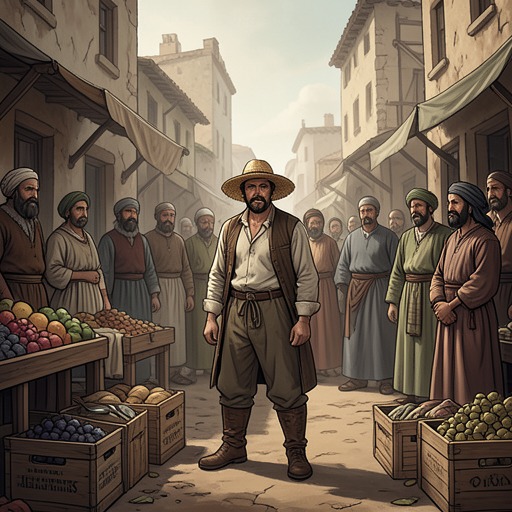
At Fort-Gono, the environment makes perception and shelter unreliable. The narrator describes the tropics’ colors as disorienting: even a sardine tin lying in the road at midday can appear momentous. Night brings relief from the day’s agitation, but immediately introduces swarms of mosquitoes, while termites steadily eat through the supports of the huts. A tornado, when it comes, could reduce whole streets of these vulnerable structures to dust. The day-and-night cycle therefore offers no secure interval: danger changes form, from oppressive light and heat to insects, decay, and the threat of sudden destruction.
The town itself stands precariously between sea and jungle. Banks, cafés, brothels, and a recruiting office give Fort-Gono the appearance of a small metropolis, but its gleaming buildings are surrounded by rocks and larvae and marked by the traffic of soldiers and officials. The contrast makes colonial settlement look less like mastery of the landscape than an exposed enclave maintained within it. Even the residents’ complaints about higher drink prices take place against an environment that makes the most basic conditions of life uncertain.
At the Compagnie Pordurière’s main warehouse, environmental hardship is inseparable from the organization of labor. To learn how to number sacks, the narrator works among clerks and crowded dockworkers in a hot, dusty building. The workers bear the overseers’ blows without visible protest, while the Director checks that the narrator is learning both sack-numbering and the falsification of weights. The warehouse thus joins physical exposure to economic exploitation: the heat and dust are not isolated discomforts but part of a workplace where labor is disciplined and the handling of goods is manipulated for profit.
The Director presents the colonial system as progress because it has replaced hunting and intertribal conflict with organized labor and the production of peanuts and rubber for taxation. Yet his own account shows how this supposed order rests on the extraction of labor and resources. The narrator’s experience in the warehouse supplies its material counterpoint: workers endure the conditions while the company converts their effort into commodities and revenue. Tropical hardship is distributed unevenly, and the people with the least authority bear its bodily costs.
The Jungle’s Rhythms and the Erosion of Time
The tropical setting continues to act beyond the warehouse and town. The narrator describes days and people as passing in fragments under vegetation, heat, humidity, and mosquitoes. In that account, even flesh, time, taste, and memory seem to dissolve, until little remains but dread. The phrasing makes environmental damage cumulative rather than a single dramatic disaster: life is worn away in small, repeated losses.
The forest’s daily sunset offers a striking counter-image. At six o’clock, the sky passes through vivid reds and greens before the colors fade and night arrives. The spectacle is beautiful, but it does not resolve into calm. Darkness brings the sound of thousands of croaking toads, and the forest’s noise grows so intense that people in a hut have difficulty hearing one another. Beauty and distress share the same recurring cycle; the landscape’s grandeur does not make it hospitable or safe.
From Colonial Labor to the Factory
The novel later places Ferdinand Bardamu in the Ford factory, where the setting is industrial rather than tropical but the pressure on the worker is recognizably related. The doctor who instructs him says that the factory does not want people to think for themselves, only to perform assigned movements. Bardamu then enters a building whose machinery shakes the floor, windows, and workers’ bodies. The environment is manufactured, but it too overwhelms perception and makes a person feel incorporated into the system around him.
The factory’s labor process reduces work to repeated, narrowly defined tasks. Bardamu is assigned to pass linchpins to a blind coworker who has calibrated them for years; after doing the job badly for three days, he is transferred to pushing a trolley of washers from one machine to another. At one station he leaves three washers, at another twelve, and at another five. The difference between the colonial warehouse and the Ford plant is not erased: one organizes the weighing and movement of colonial commodities, the other divides production into machine-paced operations. But both make the worker’s activity subordinate to an impersonal economic order, and both frame endurance as the price of remaining at work.
The factory’s effects continue after the shift ends. At six o’clock the machinery stops, but Bardamu carries its noise in his head through the night, along with the smell of oil. Over several weeks he describes becoming a different man, and he seeks bodily intimacy at a clandestine house because the movies no longer counter the physical horror of factory life. His wages are spent there, making the effort to recover a sense of living connection part of the same cycle of work and depletion. The comparison broadens the idea of environmental corrosion: tropical heat is one form of pressure, while industrial noise, repetitive labor, and fumes create another.
Significance
Across the ship, the colony, and the factory, the book makes environment a force that reveals how people and institutions behave under pressure. Tropical heat exposes social cruelty and makes survival contingent on small forms of relief; insects, unstable buildings, and illness turn the setting into a persistent threat; colonial labor channels that hardship into extraction. In America, industrial machinery produces a different landscape of bodily and mental exhaustion. The settings are not interchangeable, but their shared effect is to show human beings being shaped—and diminished—by conditions they do not control.